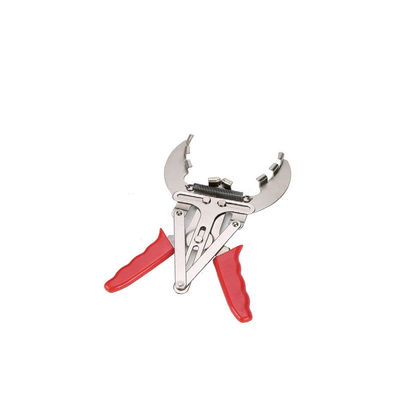
Piston Ring Installation Pliers (YD69-003A/B): Damage-Free, 80-160mm for Automotive Engine Repair
Product Specifications
| Specification Category |
YD69-003A |
YD69-003B |
| Product Name |
Piston Ring Installation Pliers |
Piston Ring Installation Pliers |
| Size Range |
110-160mm (compatible with pistons from 3.250" to 4.750") |
80-120mm (suitable for smaller-sized pistons) |
| Core Function |
Remove and mount piston rings without damage or bumping |
Remove and mount piston rings without damage or bumping |
| Target Application |
Automotive engines (medium to large piston sizes) |
Automotive engines (small piston sizes) |
Product Details
The Piston Ring Installation Pliers (available in YD69-003A and YD69-003B) are specialized tools engineered to simplify the delicate process of piston ring removal and installation in automotive engines.
A key advantage of these pliers is their damage-prevention design. Piston rings are thin, precision components--improper handling during installation or removal often leads to bending, scratching, or cracking, which compromises engine performance. These pliers feature carefully shaped jaws that evenly distribute force when gripping piston rings, allowing users to expand or compress the rings gently and precisely. This eliminates the risk of "bumping" or damaging the rings, ensuring they retain their original shape and sealing ability.
The two models cater to different piston size needs. YD69-003A, with a 110-160mm size range, fits pistons from 3.250" to 4.750"--ideal for medium to large automotive engine pistons (e.g., those in trucks or larger passenger cars). YD69-003B, at 80-120mm, targets smaller pistons (common in compact cars or small-displacement engines). Both pliers are built for ease of use: their ergonomic handles provide a secure grip, reducing hand fatigue during repeated operations, while the smooth jaw movement ensures quick, efficient ring handling--saving time compared to manual or generic tool methods.
Application Scenarios
These Piston Ring Installation Pliers are essential for scenarios involving piston ring maintenance or replacement in automotive engines:
- Automotive Repair Shops: Professional mechanics use them to service engines with worn piston rings (a common cause of low compression, oil burning, or engine misfires). The two size options let mechanics handle pistons across various vehicle models, from compact cars to light trucks.
- Engine Overhaul Projects: During full engine overhauls, replacing piston rings is a critical step. These pliers ensure the new rings are installed correctly without damage, maintaining the engine's compression ratio and overall performance.
- DIY Engine Enthusiasts: Hobbyists working on engine rebuilds (e.g., for classic cars or performance upgrades) rely on these pliers to avoid costly mistakes. The user-friendly design makes piston ring work accessible even for those with moderate mechanical experience.
- Automotive Maintenance Workshops for Fleet Vehicles: For fleets of delivery vans or company cars, regular piston ring checks are vital. These pliers enable efficient maintenance, minimizing vehicle downtime and keeping the fleet operational.
Frequently Asked Questions (FAQs)
Q1: Can these pliers be used for non-automotive piston rings (e.g., in motorcycles or generators)?
A1: They are primarily designed for automotive engines. While they may work with small motorcycle or generator pistons (if the size matches YD69-003B), we recommend confirming the piston ring diameter and thickness first--non-automotive rings may have different tolerances that the pliers cannot accommodate.
Q2: How do I choose between YD69-003A and YD69-003B?
A2: Measure your piston's diameter. If it ranges from 3.250" to 4.750" (110-160mm), select YD69-003A. For smaller pistons (80-120mm in diameter, typically under 3.250"), YD69-003B is the right choice. Using the wrong size may damage the piston rings or pliers.
Q3: Will the pliers scratch the piston surface during use?
A3: No. The jaw surfaces are polished and smooth, designed to grip piston rings without making contact with the piston itself. As long as you position the pliers correctly (only on the ring), the piston surface will remain unscratched.
Q4: Do the pliers require any maintenance after use?
A4: After each use, wipe the pliers with a clean, dry cloth to remove oil or debris. If exposed to moisture, apply a light coat of machine oil to prevent rust. Avoid using harsh chemicals that could damage the plier's surface or jaws.



 Your message must be between 20-3,000 characters!